
MindScape360™: A New Lens on Human Potential.
See Deeper. Think Sharper. Communicate Smarter.
Among the swirling mass of more than eight billion souls strutting through the great masquerade of existence, there is a singular artifact we all possess: a face. A billboard of bone and flesh. A topographical, phenotypic map of our history, habit, and happenstance.
Every face tells a story. But what we overlook is the fact that each face in fact tells two.
One story is from the conscious mind, prim and rehearsed. This is the version curated for mirrors and selfies.
The second is the rogue narrative, the one whispered in the dialect of neurotransmitters and micro-muscular flickers. A story told by the subconscious in which most fail to realize that they are both speaking and decoding at every waking moment.
Don’t judge a book by its cover, we often say! Yet, judging a book by its cover is a survival mechanism ingrained in our DNA, and in our subconscious mind.
Whenever I mention that I work with human phenotypes—our outward manifestations of genetic blueprints—I witness something amusingly predictable. Roughly eight times out of ten, people either look away for an instant or begin covering their faces, as if their cheeks and brows had suddenly been implicated in an international scandal.
Fun fact: hiding one’s face might feel like slamming shut the gates of a fortress, but the truth is, the fortress barely existed in the first place.
The human brain, a marvelous, messy machine, absorbs and interprets another’s face in a blistering average of 0.45 milliseconds. That’s faster than a blink. Faster than a hummingbird’s heartbeat. Faster, even, than the instant it takes to regret pushing the button and sending a risky text at 2 a.m.
We are all reading faces subconsciously, automatically, instinctually. We even process faces in our dreams. The only difference is that some people have the user manual, while others mistake its directives for a mystical whisper—an intuition, a hunch, a cosmic wink from the universe. But make no mistake: the face is speaking.
The question is, can you hear what it’s saying?
Of all the misguided human inclinations such as romanticizing ex-lovers or clicking “I Have Read Terms and Conditions” without ever reading them; perhaps the most stubborn is the fixation on if this, then that. As if the majority believe that the cosmos operates on a series of polite hypotheticals, gently nudging us toward caution and preparation. But the universe, for me at least, is more of a jazz musician. If this, then that..are notes it rarely bothers to play in sequence if at all; preferring the wild improvisation of when.
This difference is more than semantic. It is the scaffolding of survival. When something happens, the human organism doesn’t saunter into the halls of introspection, thoughtfully referencing a manual on resilience. No, it reacts. Our subconscious circuitry begins firing in fractions of microseconds, yanking the levers of biology.
Hereʻs a real life example: It’s a routine investor call. The kind where numbers dance obediently and confidence flows like aged whiskey. You nod, listen, anticipate the next move before it’s even spoken. You’ve got this. You can taste the success—Then—bam!—a pause, a shift, a sentence from someone who was never supposed to be on the other side of the table. There was no signal. Only the cold certainty that you’d been outplayed. There was no signal of if this, then that in this case. Only when.
Now, here’s where things really begin to get interesting. All those carefully curated strengths, those personality traits proudly showcased in corporate team-building exercises, those resilience scores from online quizzes - where are they?
Poof. Gone. Trauma, in any size or shape, does not pause for self-assessment. The limbic system hijacks the controls, deploying its archaic quadruplets: fight, flight, fawn, or freeze. Rational thought is suddenly shunted to the back of the line.
And yet, the real battle isn’t actually waged in the moment of impact—it unfolds in the slow, insidious aftermath. The subconscious mind, that tireless archivist, begins rifling through its filing cabinets, rewriting margins and flagging uncertainties. Perceptions shift. Safety is no longer measured in stable markets and airtight contracts. Instead, it becomes a boardroom where the shadows stretch too long, a handshake that lingers just a beat too late, a deal memo carrying fingerprints that shouldn’t be there.
Trust wobbles. Once-fluid strategies falter, and the mind—once a maestro of precision—hesitates mid-score, unsure which notes still belong and which must be rewritten. Subconscious rebuilding after any trauma isn’t just about moving forward. It’s about renegotiating the unspoken contract between body and brain. The instincts that saved you in the moment now must be tamed, trained, and integrated.
This…this is where the when becomes paramount.
Why does the mind cling to uncertainty? Why does the body tense at the slightest shift in a boardroom’s energy? Why does a routine investor call now carry the phantom of what next?
To find the answers, one must first understand that the subliminal mind is not programmed to have time for ponderous reflection. The answers lie deep within the subconscious, tucked away in hidden corridors where experience is archived and indexed for survival. At these silent intersections, the subliminal mind has no patience for deliberation or second-guessing.
With ruthless efficiency, it devours experience, distills it into instinct, and delivers hidden conclusions at lightning speed. Long before the numbers blur, before the unexpected voice shatters the script, and before the cold realization sets in that the game was lost before it even began.
These are well honed survival tactics that occur long before our conscious mind can so much as clear its throat.
Most humans move through life unaware of these split-second assessments assuming conscious choices are fully conscious. In reality, their subconscious has already drawn the map and nudged them toward a destination. Everyone likes to believe they are in control, yet beneath the surface, the subconscious is laying the foundation, setting the stage, and pulling the strings before we even realize there’s a script.
Research suggests that only twelve to fifteen percent of people have a natural awareness of this process—the ability to accurately sense the hidden gears turning in the background.
The rest? The remaining eighty-five to eighty-eight percent of the world navigate on instinct, unaware that their brains are constantly running calculations—sizing up faces, filtering information, and making split-second decisions long before logic or reason has a chance to weigh in.
For example; When a set of eyes, a nose, and a mouth enter our field of vision—whether in a photo, on a screen, or across a dimly lit bar, studies reveal that within “0.35 to 1.0 milliseconds”, we have already formed an impression. That’s faster than a fruit fly’s mating cycle, faster than a sneeze, faster than the regret one feels after sending another ill-advised late-night text.
And here’s the kicker—it doesn’t even have to be a real face. Just the mere suggestion of one will do.
Give the brain two dots and a curved line, and it will visualize a personality staring back even in an inanimate object. That turns out to be enough to trigger the subconscious mindʻs processing. Modern research tells us these triggers, glimmers, collisions, and convergences predict ninety-five percent of thoughts, actions, and behavioral patterns.
The conscious mind—the self-important figurehead—gets just a paltry, yet highly valued, five percent of the decision-making pie.
The subconscious neither tracks time nor distinguishes between reality and imagination, nor does it pause to consider should. It simply reacts relentlessly whether you’re locking eyes with a stranger on the street or catching your own reflection in a window. And it does so at an astonishing scale, processing information twenty-seven thousand (yes...27,500) times faster than the conscious mind. Thus, making decisions before conscious awareness even has a chance to catch up.
It is no wonder, then, that we do not merely see faces. In truth, we silently decode them, almost instantaneously, in ways so fundamental they are baked into our very DNA.
This instinct—this subconscious need to extract meaning from the human face—has been exploited, studied, and revered for eons. Ancient Taoist monks practiced Mien Shiang, the art of face reading. In the Mediterranean Basin, China, and Arabia, scholars and soothsayers alike developed their own face-reading methodologies, embedding them into everything from medicine to politics. Chaucer gave face-reading of the time a nod in The Canterbury Tales, and it inspired writers such as Charles Dickens, Edgar Allen Poe, Mark Twain, and Oscar Wilde.
“An observer of men who finds himself steadily repelled by some apparently trifling thing in a stranger is right to give it great weight. It may be the clue to the whole mystery. A hair or two will show where a lion is hidden. A very little key will open a very heavy door.” -Charles Dickens, Hunted Down, 1859.
Then came Sir Francis Galton, the English polymath who used composite photography to refine the science. His facial observation system is what ended up laying the groundwork for the facial recognition technology that now tracks our every move. Fast forwarding to the present day, neuroscience confirms what ancient wisdom always suspected: the human brain has dedicated real estate—entire clusters of neurons—whose sole function is to process facial phenotypes.
This is why we see faces in clouds, in wood grain, or in the sockets of electrical outlets. It is why an emoji can convey an entire emotional landscape with just a few strokes of a digital keypad. It is why political candidates are judged not by their policies, but by the tilt of their chin, the structure of their jaw, the joy (or lack thereof) in their eyes.
Like it or not, we are all inherently wired for face profiling. It is an inescapable function of the human experience, a survival mechanism embedded in our neurobiology.
The only question is whether we choose to remain blind to it, allowing our biases to dictate the course of our lives, or whether we seize the reins, decode the hidden language of the subconscious, and begin to see with clarity what has been right in front of us all along.
MindScape360™ was created to translate this subconscious story, mitigate hidden biases attached and bridge this knowledge into the conscious mind. Welcome to the next level of HumanCentric-AI.

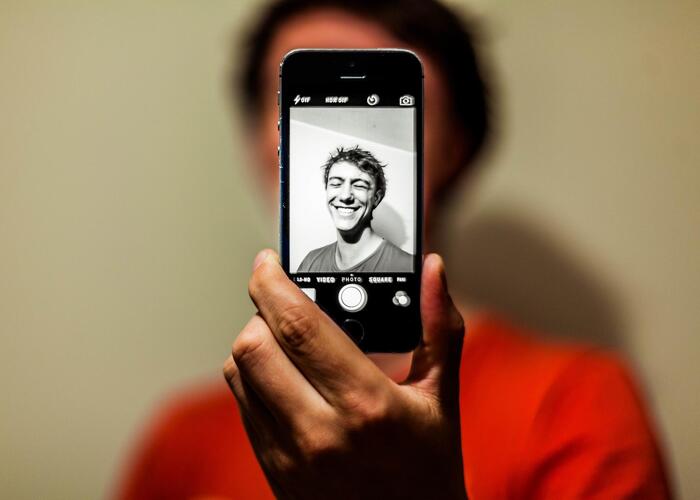
It is no surprise selfies intrigue us the way they do. Labeled as one of, if not the, most important pieces of visual stimulation our brains will e...

Where dreams are made, unmade, and occasionally spilled like red wine on white carpet.
-
 Guest post by PCvqSCLpHqZJFCXCuVuxG Reply26 05 26, May:05znEfZTXCbkdsPaOarJGSyE
 -
Guest post by PCvqSCLpHqZJFCXCuVuxG Reply26 05 26, May:05znEfZTXCbkdsPaOarJGSyE
-
Guest post by PCvqSCLpHqZJFCXCuVuxG Reply26 05 26, May:05znEfZTXCbkdsPaOarJGSyE
-
 Guest post by JKhkPdHDkDhnDRbwGRG Reply26 06 01, Jun:06XBBzkiOOGIZfIvAI
 -
Guest post by JKhkPdHDkDhnDRbwGRG Reply26 06 01, Jun:06XBBzkiOOGIZfIvAI
-
Guest post by JKhkPdHDkDhnDRbwGRG Reply26 06 01, Jun:06XBBzkiOOGIZfIvAI
-
 Guest post by LBzTiKOpiBrAZMUlH Reply26 07 11, Jul:07MsrhvunimUZWLEOalWEbyG
 -
Guest post by LBzTiKOpiBrAZMUlH Reply26 07 11, Jul:07MsrhvunimUZWLEOalWEbyG
-
Guest post by LBzTiKOpiBrAZMUlH Reply26 07 11, Jul:07MsrhvunimUZWLEOalWEbyG
-
 Guest post by fGEuGbRbXAyAGCUl Reply26 07 19, Jul:07NIJrSahfuJjHTwLcseV
 -
Guest post by fGEuGbRbXAyAGCUl Reply26 07 19, Jul:07NIJrSahfuJjHTwLcseV
-
Guest post by fGEuGbRbXAyAGCUl Reply26 07 19, Jul:07NIJrSahfuJjHTwLcseV
-
 Guest post by vTzsPvMJbYyoQgIiYEkJMZe Reply26 08 24, Aug:08dZsvUSpiwFKPcVtSVAUG
 -
Guest post by vTzsPvMJbYyoQgIiYEkJMZe Reply26 08 24, Aug:08dZsvUSpiwFKPcVtSVAUG
-
Guest post by vTzsPvMJbYyoQgIiYEkJMZe Reply26 08 24, Aug:08dZsvUSpiwFKPcVtSVAUG